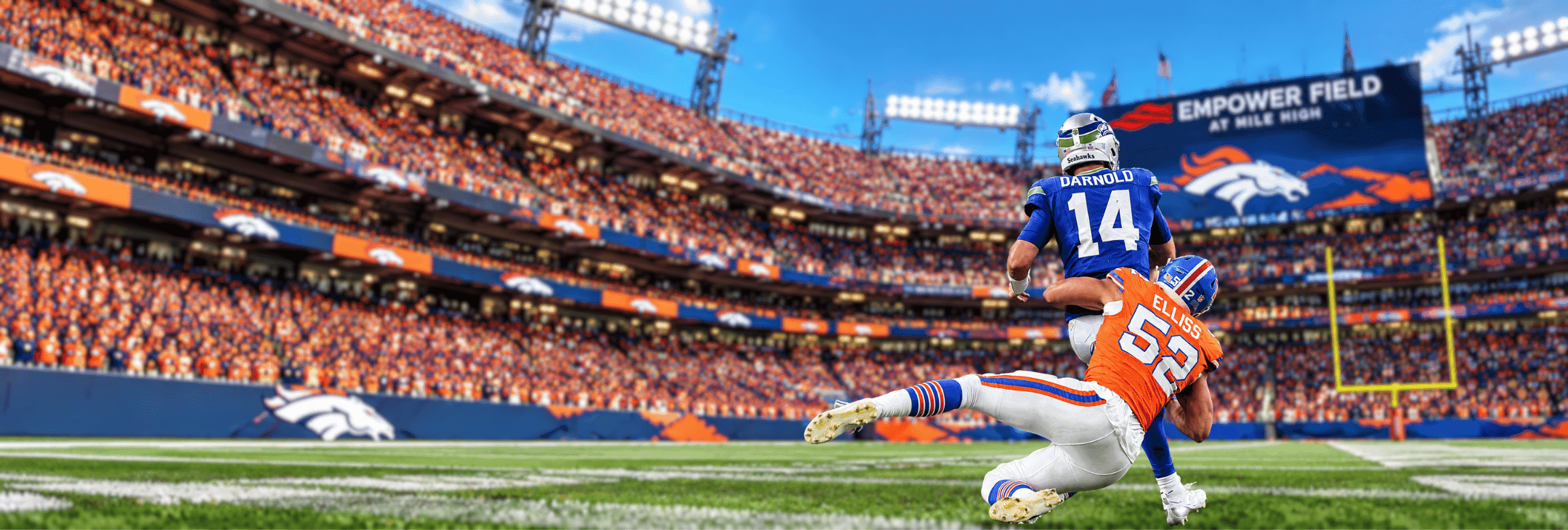

Ja’Quan McMillian’s Overtime Interception Sets Up Wil Lutz’s 53-Yard Game-Winning Field Goal As Denver Survives Seattle’s Fourth-Quarter Comeback At Empower Field At Mile High.
The Denver Broncos defeated the Seattle Seahawks 17-14 in overtime on Thursday, October 15, at Empower Field at Mile High, earning a hard-fought victory in a Week 6 matchup defined by defensive pressure, costly turnovers and a dramatic late comeback. Denver improved to 4-2, while Seattle fell to 3-3 after failing to complete its recovery from an 11-point fourth-quarter deficit. The Broncos established control in the second quarter, scoring two rushing touchdowns to build a 14-3 halftime advantage. However, their offense struggled to produce meaningful gains after the break, allowing Seattle to gradually work its way back into contention. The Seahawks scored 11 unanswered fourth-quarter points, combining a George Holani rushing touchdown, a successful two-point conversion to Rashid Shaheed and a Jason Myers field goal to force overtime. Denver's defense ultimately prevented Seattle from completing the comeback.
After cornerback Kris Abrams-Draine intercepted Sam Darnold late in regulation, the Broncos remained ahead of a potential Seattle go-ahead score. McMillian then delivered the decisive turnover in overtime, intercepting Darnold and giving Denver favorable field position. Four plays later, kicker Wil Lutz converted a 53-yard field goal to end the contest. The result highlighted Denver's ability to produce critical defensive plays despite limited offensive output. For Seattle, the defeat was particularly frustrating because its defense recovered after a difficult opening half and gave the offense opportunities to win. Ultimately, Denver prevailed by protecting its early lead long enough for its defense and special teams to settle the outcome.
Denver's Two Touchdowns Establish Early Control
Denver's second-quarter offense supplied the foundation for its victory, producing two sustained touchdown drives after Seattle opened the scoring with a 55-yard field goal from Myers in the first quarter. Running back J.K. Dobbins finished a 16-play, 74-yard possession with a four-yard rushing touchdown, giving the Broncos a 7-3 lead. Denver extended the advantage later in the quarter when rookie running back RJ Harvey scored on a one-yard run following a nine-play, 79-yard drive. Lutz converted both extra points, putting the Broncos ahead 14-3 at halftime. Quarterback Bo Nix completed 17 of 27 passes for 107 yards without a passing touchdown, while Denver finished with 168 total yards and 13 first downs.
The offense's production dropped sharply after halftime, however, as Seattle's defense tightened its coverage and consistently pressured Nix. The Seahawks limited Denver to 30 net yards and two first downs in the second half, forcing the Broncos to punt on their post-halftime possessions before overtime. Denver's inability to extend its lead turned what initially appeared to be a comfortable advantage into a tense finish. Nevertheless, the Broncos had done enough early to put themselves in position to win, and their defense repeatedly prevented Seattle from converting promising drives into points. Denver's rushing touchdowns were particularly important because the passing game never developed into a consistent source of production. The Broncos ultimately needed their defense and special teams to finish what their offense had started.
Seattle's Fourth-Quarter Rally Forces Overtime
Seattle responded to Denver's early scoring with a determined fourth-quarter comeback, overcoming an 11-point deficit to level the score at 14-14. Running back George Holani provided the breakthrough with a one-yard rushing touchdown at the 5:41 mark. Darnold then connected with Shaheed on the two-point conversion, reducing Denver's lead to 14-11. The Seahawks continued to push for an equalizer, and Myers converted a 34-yard field goal with three seconds remaining in regulation to send the game into overtime. Seattle's comeback was supported by a strong receiving performance from Jaxon Smith-Njigba, who finished with 12 receptions for 134 yards. Shaheed also contributed five catches for 66 yards and supplied valuable field position through his return game, including a 31-yard punt return late in the fourth quarter.
Darnold completed 27 of 46 passes for 278 yards, but his two interceptions proved costly in the game's decisive moments. Seattle also struggled with pass protection, allowing five sacks as Denver consistently disrupted the quarterback's rhythm. Despite those problems, the Seahawks generated 353 total yards and 24 first downs, substantially exceeding Denver's offensive totals. Their defense helped keep the deficit manageable by shutting down the Broncos after halftime. However, Seattle's inability to finish drives earlier in the contest meant that the late rally left little margin for error. The Seahawks succeeded in forcing overtime, but they could not sustain that momentum long enough to secure the victory.
Kris Abrams-Draine And Ja'Quan McMillian Deliver Critical Interceptions
Denver's defensive performance proved decisive, particularly because its offense failed to score during the second half of regulation. The Broncos recorded five sacks and 17 quarterback hits, repeatedly disrupting Darnold and preventing Seattle from converting several promising possessions into touchdowns. The late-regulation interception belonged to rookie cornerback Kris Abrams-Draine, who intercepted Darnold with approximately 1:31 remaining, preserving Denver's opportunity to avoid a late Seattle lead. This play must be distinguished from the overtime turnover: McMillian recorded the second interception at the pivotal moment in extra time, when Darnold's pass was picked off and returned the ball to Denver's offense. McMillian's interception positioned the Broncos for the winning field goal, and Lutz converted from 53 yards to finish the game.
Denver's defensive pressure was especially significant given that Seattle's offense had accumulated more than twice the Broncos' total yardage. On the opposite side, Seattle's defense deserves recognition for its recovery after allowing two second-quarter touchdowns. The Seahawks held Denver scoreless throughout the second half of regulation and restricted the Broncos to just 74 rushing yards for the game. Inside linebacker Ernest Jones IV led Seattle with nine tackles and recorded a sack, continuing his strong defensive form. Yet Seattle's defensive resilience could not fully compensate for the offense's turnovers. Denver's ability to force mistakes in crucial situations ultimately outweighed Seattle's statistical advantage, demonstrating how a single interception can change the outcome of a closely contested NFL game.
Injury Concerns And Key Lessons For Both Teams
The result leaves both teams with important questions as they prepare for their next games. Denver can take confidence from its defense, which generated three takeaways and consistently pressured Darnold, but the offense must improve after producing only 168 total yards. Nix's 107 passing yards underline the need for more consistent production, particularly when an opponent adjusts defensively after halftime. The Broncos also entered the contest without cornerback Patrick Surtain II and safety Talanoa Hufanga, both sidelined by ankle injuries. Riley Moss, who had been questionable with a rib injury, was active and contributed to Denver's defensive effort. Seattle was missing linebacker Drake Thomas and reserve linebacker Chazz Surratt, while running back Zach Charbonnet remained unavailable as he recovered from knee surgery. Tight end Elijah Arroyo sustained a shoulder injury during the game and was listed as doubtful to return; a confirmed diagnosis or timetable was not available in the verified in-game update.
Despite those absences, Seattle's defense showed considerable resilience, and Smith-Njigba continued to demonstrate his importance to the passing attack. The Seahawks must nevertheless address their turnovers and protection issues if they are to convert strong yardage totals into victories. Darnold's interceptions erased opportunities to capitalize on the defense's work, while the five sacks disrupted several important drives. Denver, meanwhile, will need a more balanced offensive performance to avoid placing such a heavy burden on its defense in future games. The 17-14 overtime result was a significant win for the Broncos and a painful setback for Seattle, but both teams have clear areas to address as the season progresses.