Yamamoto Sets The Tone In A Tight NLDS Battle
The Los Angeles Dodgers delivered a complete postseason performance, defeating the Atlanta Braves 3-1 at Truist Park behind a dominant start from Yoshinobu Yamamoto and timely power from Enrique Hernández and Freddie Freeman. The Dodgers finished with eight hits and three runs while committing no errors, while Atlanta managed just five hits and one run and committed two errors. From the opening inning, Yamamoto established control of the game, striking out Drake Baldwin and Ronald Acuña Jr. before Matt Olson grounded out to end the first. The right-hander continued attacking the Braves lineup with his fastball and secondary pitches, repeatedly putting Atlanta hitters in difficult counts. Yamamoto ultimately struck out 10 Braves hitters, a critical performance that allowed Los Angeles to protect its narrow lead throughout the night. Atlanta had only a few opportunities to generate sustained pressure, and Yamamoto consistently answered them. His performance became especially important because Chris Sale also kept the Dodgers quiet through the first three innings. With both starters working effectively early, the game appeared headed toward another tense postseason finish. Instead, Los Angeles eventually found the breakthrough it needed, and Yamamoto made sure Atlanta could not turn the game around.
Enrique Hernández Breaks The Deadlock
The Dodgers finally broke through in the fourth inning, and it came from a familiar postseason contributor. Andy Pages opened the inning with a single, and after Kyle Tucker lined out to Ozzie Albies, Enrique Hernández launched a two-run home run to left field. The homer scored Pages and immediately gave Los Angeles a 2-0 advantage. It was Hernández’s first home run of the postseason and one of the most important swings of the night. The Dodgers had already put runners on base earlier in the game, but Atlanta repeatedly escaped trouble. Hernández changed that with one swing, giving Los Angeles the lead and putting the Braves under immediate pressure. His contribution was particularly valuable because Sale had already recorded six strikeouts through the first two innings and was limiting the Dodgers’ ability to generate consistent offense. Hernández’s homer demonstrated the importance of timely hitting in October: Los Angeles did not need a long rally to create damage. It needed one well-executed at-bat, and Hernández delivered. The Dodgers’ veteran utility player finished 1-for-4 with two runs batted in and two strikeouts, but the most important number was the two runs his fourth-inning blast put on the scoreboard.
Freeman Adds The Insurance Run
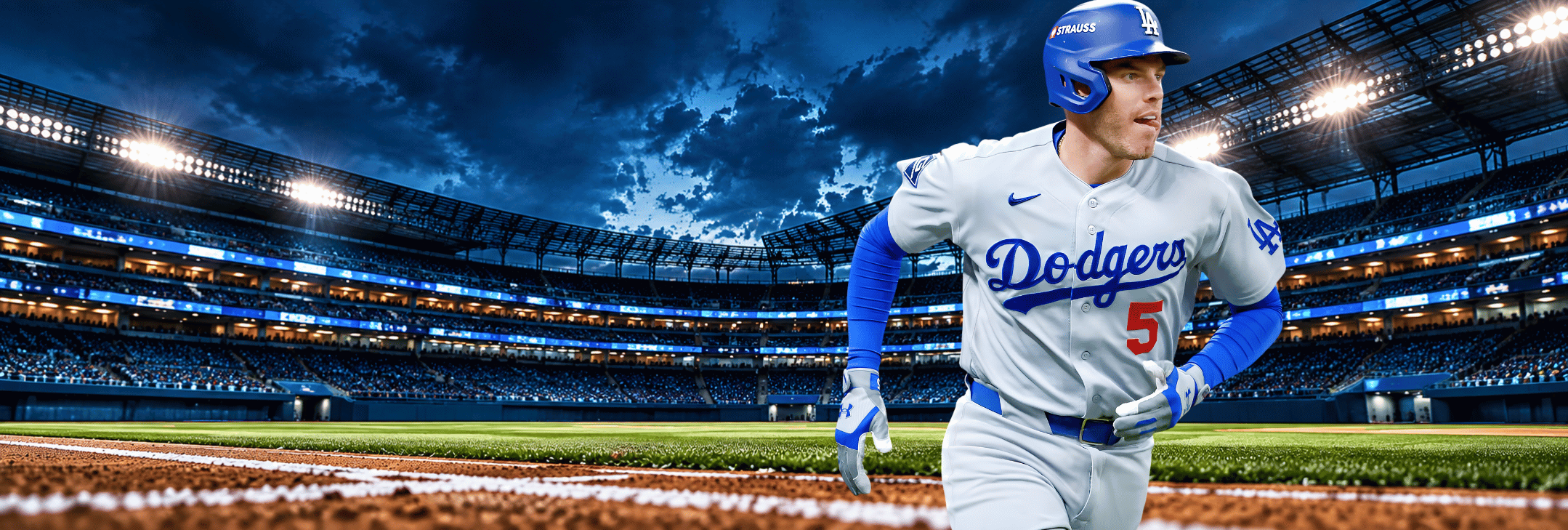
Just when Atlanta needed to stop the bleeding, Freddie Freeman provided another major blow. After Mookie Betts grounded out, Freeman followed Hernández’s home run with a solo shot to right-center field, his second home run of the postseason. The back-to-back power sequence pushed Los Angeles’ advantage to 3-0 and gave Yamamoto valuable breathing room. Freeman’s homer also carried extra significance because of what happened earlier in the series. During the third inning, Freeman appeared to have a potential home run robbed when Mauricio Dubón made an outstanding play in left field. The Braves outfielder tracked the ball and made an extraordinary catch, turning what could have been a major extra-base hit into an out. Freeman did not allow that frustration to linger. His fourth-inning home run gave him an immediate answer and demonstrated his ability to respond in a postseason environment. Freeman finished the night 1-for-4 with one run, one RBI, one walk and one strikeout, while his home run gave the Dodgers the third and ultimately decisive run. With Hernández and Freeman supplying the power, Los Angeles suddenly had a three-run cushion in a game that had been scoreless for the first three innings.
Braves Finally Break Through
Atlanta finally put a run on the board in the fifth inning, creating its best opportunity to change the direction of the game. Mauricio Dubón and Lane Thomas opened the inning with consecutive singles, and Austin Riley followed with an infield pop-up for the first out. After Rowdy Tellez drew a walk as a pinch-hitter, Atlanta had the bases loaded and the pressure shifted toward Yamamoto. Drake Baldwin then grounded out to first, allowing Dubón to score and cutting the Dodgers’ lead to 3-1. The Braves still had a runner at third, but Yamamoto escaped the inning when Ronald Acuña Jr. grounded out to Miguel Rojas at second base. That sequence proved critical. Atlanta had created a legitimate scoring opportunity, but Los Angeles limited the damage to one run. Yamamoto continued to attack the Braves lineup afterward, retiring Atlanta in order in the sixth and seventh innings. He struck out Olson to begin the sixth, then finished the seventh by striking out Lane Thomas and Austin Riley. By the end of his outing, Yamamoto had produced the kind of performance the Dodgers needed in a high-pressure postseason game.
Dodgers’ Bullpen Protects The Lead
Yamamoto’s work gave the Dodgers a foundation, but Los Angeles still needed to finish the job. After Yamamoto exited following seven innings, the Dodgers turned to their bullpen to protect the 3-1 advantage. Tanner Scott handled the eighth inning and worked around a Ronald Acuña Jr. walk, striking out Brewer Hicklen and retiring Matt Olson to end the frame. In the ninth, Edwin Díaz entered with the Dodgers still holding a two-run lead. Atlanta immediately created some tension when Ozzie Albies doubled sharply to center field, putting the potential tying run closer to the plate. Michael Harris II grounded out, moving Albies to third, but Díaz and the Dodgers remained composed. Mauricio Dubón then flew out in foul territory, leaving Atlanta with one final opportunity. Pinch-hitter Mike Yastrzemski grounded softly to Mookie Betts at shortstop, and the game was over. Díaz recorded the save, while the Dodgers’ pitching staff combined to limit Atlanta to only five hits. The bullpen’s ability to navigate the ninth inning without allowing another run ensured that Yamamoto’s outstanding start and the Dodgers’ timely home runs were preserved.
Los Angeles Delivers A Complete October Victory
The 3-1 victory ultimately belonged to the Dodgers because they executed in the moments that mattered most. Yamamoto earned the win after striking out 10 over seven strong innings, while Sale took the loss after allowing three runs. Hernández’s two-run homer opened the scoring, Freeman’s solo blast provided the insurance, and the Dodgers’ defense remained clean throughout the contest. Mookie Betts also contributed two hits, while Freeman, Hernández and the rest of the lineup combined to produce enough offense against Atlanta’s pitching. The Braves had opportunities, particularly during the fifth inning and again in the ninth, but Los Angeles repeatedly found ways to shut the door. The Dodgers’ eight hits, three runs and zero errors tell the story of an efficient postseason performance rather than an overwhelming offensive explosion. Atlanta finished with five hits, one run and two errors, leaving the Braves unable to capitalize on their opportunities. For Los Angeles, the victory showcased the formula that can carry a team through October: elite starting pitching, timely power, clean defense and a bullpen capable of finishing the game. With Yamamoto setting the tone and Hernández and Freeman providing the decisive swings, the Dodgers walked away from Truist Park with a hard-earned 3-1 victory over the Braves.