
Gabby Williams Leads A Balanced Golden State Effort As The Valkyries Dominate The Glass, Control The Game Defensively, And Take A 1-0 Series Lead Over The Defending Champions
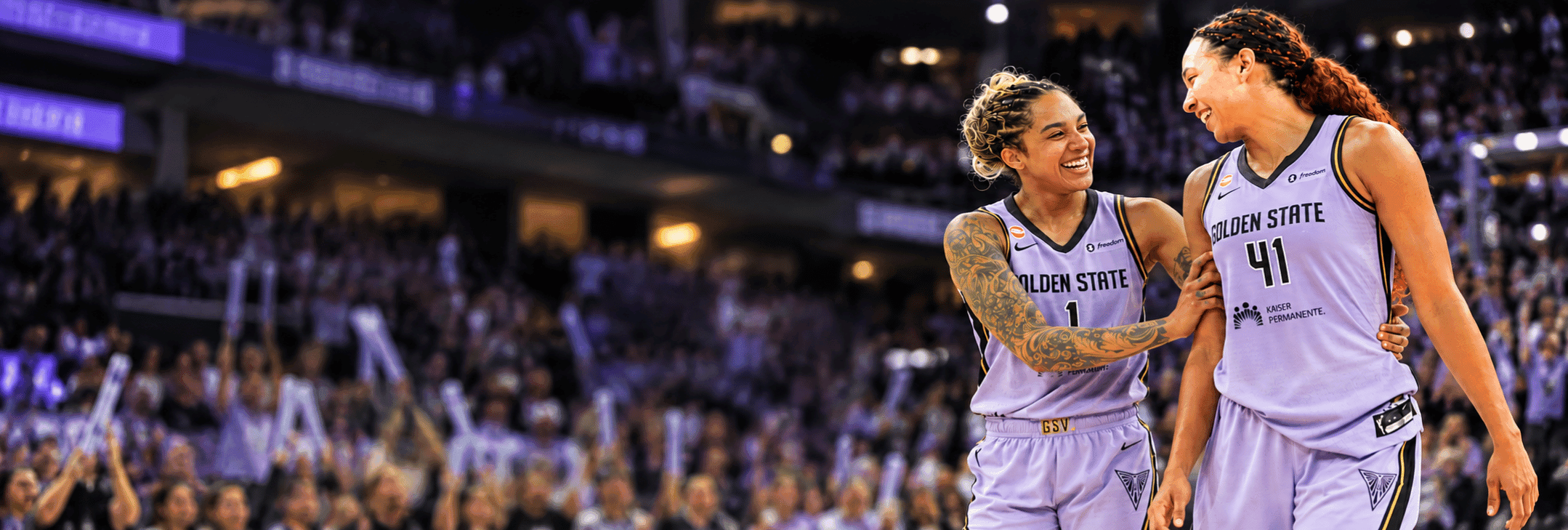
The Golden State Valkyries opened their WNBA semifinal series with an impressive 71-60 victory over the defending champion Las Vegas Aces on Sunday, October 4, at Chase Center, taking a 1-0 lead in the best-of-five series and immediately putting pressure on one of the league's most experienced postseason teams. Golden State entered the matchup with confidence after winning its first playoff series in franchise history, while Las Vegas arrived as the defending champions after advancing through a difficult first-round series against the Indiana Fever. What followed was a physical, defensive battle in which the Valkyries consistently made the most of their opportunities and refused to allow the Aces to establish a sustained offensive rhythm. Gabby Williams emerged as the central figure for Golden State, delivering a game-high 25 points while adding 11 rebounds and five assists in 34 minutes. Her performance represented her first playoff double-double and continued the remarkable postseason run she had begun during the first round. Williams was particularly effective early, scoring 18 points in the first half on 6-of-10 shooting while connecting on three 3-pointers. Her scoring helped Golden State overcome an otherwise uneven offensive opening and gave the Valkyries the confidence to establish control. The game was never dominated by high-scoring stretches, but Golden State repeatedly found timely answers whenever Las Vegas attempted to gain momentum. The Valkyries' largest lead reached 13 points, while the Aces never led by more than three, illustrating how effectively Golden State shifted the balance of the contest after the opening minutes. The Valkyries ultimately finished the afternoon shooting 37.7 percent from the field, while Las Vegas managed only 33.9 percent. Those percentages reflected the defensive character of the matchup and showed why every possession mattered. Golden State did not need an explosive offensive total to win because its defense and rebounding consistently gave the team opportunities to control the tempo. The Valkyries also finished with a franchise playoff-record 52 rebounds, a statistic that became one of the clearest explanations for the final result. Golden State's ability to win the physical battle prevented Las Vegas from generating the second-chance opportunities that could have helped compensate for its shooting struggles. Williams' all-around production was therefore only one piece of a much larger team performance. She supplied the scoring and playmaking, but the Valkyries collectively dictated the game's physical tone. Against an Aces team featuring A'ja Wilson, Chelsea Gray and Jackie Young, Golden State understood that it could not afford to allow easy possessions. The Valkyries answered that challenge with defensive discipline, relentless work on the glass and a level of composure that allowed them to protect their home court and begin the semifinal series with a significant victory.
Golden State Wins The Rebounding Battle And Controls The Interior
The defining statistical advantage of Game 1 was Golden State's dominance on the boards. The Valkyries collected 52 rebounds compared with only 25 for the Aces, producing a 27-rebound advantage that repeatedly changed the value of individual possessions. In a playoff game decided by only 11 points, that difference was enormous. Golden State's rebounding allowed the team to survive periods when its shooting was inconsistent and forced Las Vegas to defend additional possessions. Kiah Stokes played a major role in that effort, setting the tone from the opening quarter and finishing with 14 rebounds. She collected seven rebounds in the first quarter alone and entered halftime with nine rebounds and three blocked shots, according to the postgame reporting. Her interior presence was especially important against Wilson, who entered the series as the WNBA's leading scorer and one of the most dominant frontcourt players in the league. Stokes' familiarity with Wilson also added an interesting layer to the matchup, as the two were former teammates during Las Vegas' championship years. While Wilson still produced 24 points, Golden State prevented the Aces from surrounding her offense with enough consistent production to change the outcome. Kayla Thornton also delivered a major contribution on the glass, recording 11 rebounds to go with eight points. Her activity gave the Valkyries another physical presence and helped Golden State maintain control whenever Las Vegas attempted to respond. Having three players reach double figures in rebounds demonstrated that the advantage was not the product of one player simply having a dominant night. It was a team-wide commitment to positioning, boxing out and pursuing the ball. Golden State's defensive effort also forced Las Vegas into difficult offensive possessions. The Aces shot only 33.9 percent overall and struggled to string together successful possessions. Even when individual players found openings, the Valkyries frequently recovered and made subsequent plays difficult. Golden State's defense had already been one of the team's defining strengths during the regular season, and that identity carried directly into the postseason. The Valkyries finished the regular season with the league's top defensive rating, and Game 1 showed why that reputation matters in playoff basketball. The Aces were able to score 60 points, but they never found the offensive rhythm necessary to consistently pressure Golden State. Las Vegas' inability to compete on the boards compounded the problem. The Aces were often forced to make their first shot count because Golden State was so effective at securing defensive rebounds, while the Valkyries repeatedly earned extra chances through their own offensive rebounding. The result was a game in which Golden State could withstand its own offensive imperfections. The Valkyries went just 7-for-24 from 3-point range and committed 14 turnovers, but their defense and rebounding prevented those weaknesses from becoming decisive. In a semifinal against the defending champions, that type of balance is invaluable. Golden State demonstrated that it can win even when its offense is not operating at its highest level, provided the defense remains aggressive and the team continues to dominate the physical aspects of the game.
Valkyries Bench Provides A Crucial Advantage
Golden State's starting lineup received the headlines, but the Valkyries' bench production became another major factor in the victory. Golden State's second unit outscored Las Vegas' bench 27-7, giving the home team a 20-point advantage in reserve scoring. Kaitlyn Chen led that group with 11 points and became the only Golden State player besides Williams to finish in double figures. Her contribution became particularly important during the third quarter, when Veronica Burton struggled to find her offensive rhythm. Burton missed a layup and a 3-pointer during one sequence before leaving the floor with 7:29 remaining in the period, and head coach Natalie Nakase turned to Chen for the remainder of the game. Chen responded with the type of offensive production Golden State needed to keep the Aces from turning their defensive pressure into a comeback. Aminata Gueye also provided one of the most unexpected sparks of the afternoon. Gueye played a career-high 12 minutes and finished with nine points on 4-of-5 shooting, while seven of those points came during the third quarter. She added two steals and a block, giving the Valkyries valuable energy on both ends of the floor. Her performance was particularly notable because her playing time had been limited before the semifinal matchup, making her contribution an important example of Golden State's depth. The Valkyries did not need every rotation player to produce a large scoring total because their bench collectively provided enough offense to punish Las Vegas whenever the Aces' stars were resting. The matchup also included an important pregame moment for Janelle Salaün, who was presented with the 2026 Kia WNBA Sixth Player of the Year award before tipoff. Salaün had been unanimously selected for the honor after leading all WNBA reserves in scoring during the regular season at 12.7 points per game. Her recognition added another reminder of how much depth Golden State has built around its core. The Valkyries' bench strength became especially important because the game remained close enough for every scoring burst to matter. Golden State did not have the luxury of cruising through long stretches, and the Aces repeatedly tried to create opportunities for Wilson, Gray and Young to bring the game back within reach. The reserve players helped prevent those efforts from becoming sustained runs. Golden State also received a strong defensive contribution from its overall rotation, allowing the starters to remain effective while the second unit maintained the intensity. The team's ability to mix lineups without losing its defensive identity was one of the reasons the Valkyries maintained control. When Jackie Young hit a 3-pointer with 8:25 remaining to reduce Golden State's lead to 58-53, the Valkyries needed an answer. Rather than panic, they continued to execute and prevented Las Vegas from turning the five-point deficit into a full comeback. That composure was an important part of the victory. The Valkyries showed that their depth is not simply about having additional scorers available; it is about having players who can enter the game, maintain the defensive standard and contribute when the moment demands it. Against a veteran Las Vegas team with championship experience, that level of roster balance could become increasingly important as the series continues.
A'ja Wilson And Chelsea Gray Lead The Aces, But Las Vegas Cannot Find Enough Offense
Las Vegas received strong individual performances from A'ja Wilson and Chelsea Gray, but the defending champions were unable to generate enough offense around their stars to overcome Golden State's defensive pressure and overwhelming rebounding advantage. Wilson finished with 24 points and remained the primary offensive threat throughout the afternoon. She scored 15 points in the first half and continued to attack despite the Valkyries' efforts to make her work for every possession. Gray added 16 points and provided the veteran shot creation that has been central to Las Vegas' success during its championship years. Yet the Aces ultimately finished with only 60 points, their lowest scoring total of the season, and their 33.9 percent shooting reflected how difficult Golden State made the game. Jackie Young supplied 11 points and produced an important moment in the fourth quarter when her 3-pointer pulled Las Vegas within five points at 58-53 with 8:25 remaining. That basket gave the Aces an opportunity to completely change the direction of the game, but Golden State responded instead of allowing the defending champions to seize momentum. The Aces' inability to capitalize on that opening reflected the broader problem they faced throughout Game 1: Golden State consistently had an answer whenever Las Vegas threatened to make a run. The injury situation made the challenge even more difficult for the Aces. Jewell Loyd exited early in the third quarter with a left leg injury and did not return. She finished the game without scoring, going 0-for-2 from the field, while recording two rebounds, one assist and one turnover. After the game, the team said Loyd was being evaluated, and there was no immediate diagnosis or confirmed timetable for her return. That means her availability for Game 2 remains uncertain and should not be assumed either way until the Aces provide another update. Stephanie Talbot also missed Game 1 because of a left leg injury. Las Vegas entered the semifinal already dealing with a depleted rotation, and losing another player during the game further reduced the team's available options. Head coach Becky Hammon acknowledged the team's injury-related depth concerns before the game, emphasizing the need for the remaining players to step up. The Aces were therefore forced to rely heavily on their established stars while Golden State was able to find meaningful contributions throughout its rotation. That contrast became increasingly important as the game progressed. Wilson and Gray produced, but Golden State was able to spread its contributions across Williams, Stokes, Thornton, Chen and Gueye. Las Vegas now has to determine how to address the rebounding deficit while also finding additional offensive options. The Aces cannot simply depend on Wilson and Gray to carry the scoring burden against a Golden State defense that has shown it can make life difficult for elite offensive players. The Game 1 result does not erase Las Vegas' championship experience, but it does provide a clear warning: if the Aces cannot improve their shooting, rebound more effectively and generate greater production from the supporting cast, Golden State will have an opportunity to maintain control of the series.
Golden State Moves One Step Closer To The WNBA Finals
The significance of Golden State's 71-60 victory extends beyond the first game of the series because the Valkyries have now demonstrated that they can defeat the defending champions in a postseason environment without needing an overwhelming offensive performance. Williams supplied 25 points, 11 rebounds and five assists, Stokes controlled the glass with 14 rebounds, Thornton added 11 rebounds and eight points, Chen scored 11 points off the bench, and Gueye delivered nine points in a career-high 12 minutes. Together, those contributions created the balance Golden State needed to overcome its 37.7 percent shooting and 14 turnovers. The Valkyries' 52-25 rebounding advantage was the clearest representation of their approach. They were more physical, created more opportunities and repeatedly denied Las Vegas the second chances required to sustain offensive pressure. Defensively, Golden State held the Aces to 60 points and 33.9 percent shooting, forcing the defending champions into one of their least productive offensive games of the season. Williams' performance gave the Valkyries a reliable scoring centerpiece, but the victory ultimately belonged to the entire team. Golden State's ability to receive contributions from multiple players made it difficult for Las Vegas to focus exclusively on one threat. That balance could become increasingly important as the series moves forward. Game 2 will return to Chase Center on Wednesday, October 7, giving Golden State an opportunity to take a 2-0 series lead before the matchup shifts to Las Vegas for Game 3. The Aces, meanwhile, will enter Game 2 knowing that the margin for error has already become smaller. They need a stronger performance on the boards, greater efficiency from the field and improved production from the supporting cast. The health of Loyd will also remain an important storyline, but until the Aces provide an official update, her status should be treated as uncertain rather than assuming she will or will not play. For Golden State, the objective is much simpler: repeat the defensive intensity, continue attacking the glass and find enough offense to complement Williams. The Valkyries have already accomplished something significant by taking down the defending champions in the opening game, but the series is far from finished. Las Vegas has championship experience, elite individual talent and the ability to make adjustments between games. Golden State will therefore need to maintain the same discipline that produced the opening victory. Still, Game 1 belongs to the Valkyries. They protected home court, controlled the boards, won the bench battle and consistently answered every serious challenge from the Aces. Williams provided the star performance, but the larger story was Golden State's collective execution. With a 1-0 semifinal advantage and another home game ahead, the Valkyries have given themselves an early opportunity to move within one victory of the WNBA Finals and have shown that their first postseason series win was not the ceiling of this franchise. It may only be the beginning of something considerably bigger.