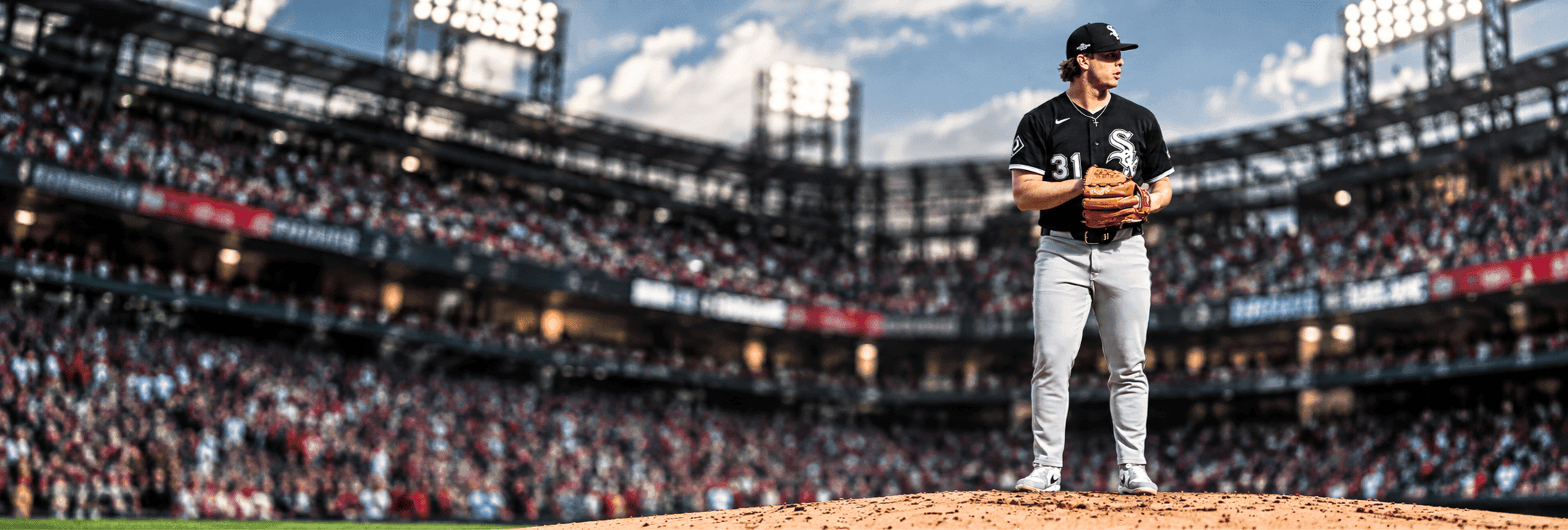

Chicago’s Pitching Staff Delivers A Three-Hit Shutout While Munetaka Murakami And Colson Montgomery Provide The Key Offensive Plays In Cleveland
The Chicago White Sox opened their American League Division Series with a 3-0 victory over the Cleveland Guardians on Saturday, October 3, 2026, at Progressive Field, taking a 1-0 lead in the best-of-five series. Chicago’s victory was built around a carefully executed pitching plan and timely offensive production, with five White Sox pitchers combining to hold Cleveland to just three hits while keeping the Guardians off the scoreboard throughout all nine innings. Hagen Smith started for Chicago against Cleveland left-hander Parker Messick, and Smith immediately established the tone by working through the early innings without allowing a run. The White Sox defense also supported him with an important play in the third inning, when Braden Montgomery made a sliding catch on a ball hit by Travis Bazzana. Smith eventually exited with Cleveland still scoreless, and Bryan Hudson entered with the Guardians threatening in the bottom of the third. Cleveland had loaded the bases, creating the first major scoring opportunity of the game, but Hudson responded by getting Chase DeLauter to hit a playable ball to the outfield, ending the threat and keeping the game tied at 0-0. That escape proved important because Cleveland would create another bases-loaded situation in the fourth inning. This time, Anthony Kay took over and again prevented the Guardians from scoring, getting Brayan Rocchio to fly out and leaving Cleveland empty-handed. The sequence illustrated the central theme of the afternoon: the Guardians were able to put runners on base, but Chicago repeatedly produced the critical out before Cleveland could convert those opportunities into runs. The official MLB game record shows Chicago eventually finished with three runs on six hits and no errors, while Cleveland managed only three hits and also played error-free baseball. The White Sox therefore did not need an overwhelming offensive performance. Instead, they needed their pitching staff to maintain control whenever Cleveland threatened, and that is exactly what happened. The result was Chicago’s first victory of the ALDS and a road shutout that placed the White Sox in front in the series after Game 1.
Munetaka Murakami Breaks The Scoreless Tie With A Two-Run Blast
The game remained scoreless through three innings before Munetaka Murakami delivered the decisive breakthrough in the top of the fourth. Miguel Vargas reached base to begin the rally, and Murakami followed with a two-run home run against Messick that immediately put Chicago ahead 2-0. MLB’s official game story identifies the home run as the first postseason homer of Murakami’s career and notes that he became the fourth White Sox rookie to homer in the postseason, joining Gavin Sheets, Luis Robert Jr. and Tadahito Iguchi. The timing of Murakami’s swing was particularly important because Messick had successfully navigated several early Chicago threats and had prevented the White Sox from scoring during the opening three innings. Murakami changed that with one powerful swing, sending the ball out of the ballpark and giving Chicago its first lead of the afternoon. The homer also provided valuable breathing room for a White Sox pitching staff that was operating without relying on a conventional long outing from its starter. Chicago had entered the postseason with Smith available to begin the game, and the bullpen was then responsible for covering the remainder of the contest. Murakami’s two-run homer allowed the pitchers behind Smith to work with a lead rather than having to protect a scoreless game. Messick nevertheless kept Cleveland within reach after the homer, and the Guardians continued to play strong defense. The most notable defensive sequence came in the sixth inning when Angel Martínez made a spectacular leaping catch on a hard-hit ball from Tommy Pham at the wall, turning the play into a double play and preventing Chicago from extending its lead at that moment. MLB’s Statcast information recorded Pham’s drive at 106.1 mph with a 31-degree launch angle and a distance of 366 feet, illustrating just how significant Martínez’s defensive play was. Cleveland’s defense therefore gave the Guardians opportunities to stay in the game, but its offense remained unable to produce the same kind of decisive moment. Murakami’s home run remained the difference as the White Sox carried a 2-0 advantage into the later innings. His offensive contribution became the signature moment of Game 1, particularly because Chicago had generated its lead without needing a large number of hits or a sustained offensive rally.
Colson Montgomery Adds Insurance With A Seventh-Inning RBI Double
Chicago’s offense added an important insurance run in the top of the seventh inning when Colson Montgomery delivered an RBI double against Cleveland reliever Erik Sabrowski. Kyle Teel reached base and eventually moved into scoring position, setting the stage for Montgomery with two outs. Montgomery then sent a double down the left-field line, allowing Teel to score and increasing Chicago’s lead to 3-0. MLB’s official video description confirms that Montgomery’s double scored Teel in the seventh inning. The run was significant because Cleveland had spent much of the game within striking distance. A two-run deficit still left the Guardians one swing away from tying the game, but Montgomery’s extra-base hit created a three-run cushion and gave Chicago’s pitching staff considerably more room to operate during the final innings. Montgomery’s contribution also demonstrated that the White Sox were not dependent entirely on Murakami’s power. Chicago received its first two runs from the home run and its third run from a timely extra-base hit, producing exactly the kind of efficient offense that can determine a postseason game. Cleveland continued to search for an answer, but the Guardians could not string together enough hits to create sustained pressure. Their three-hit total reflected the larger offensive problem throughout the afternoon. Steven Kwan, José Ramírez, Chase DeLauter, Jo Adell, Angel Martínez, David Fry, Travis Bazzana, Austin Hedges and Brayan Rocchio were the Cleveland hitters listed in the official starting lineup, but the Guardians were unable to generate a scoring hit against Chicago’s succession of pitchers. Bazzana did provide one of Cleveland’s important offensive moments with a double, but the Guardians could not follow it with the necessary production. On the Chicago side, the White Sox lineup was constructed with Messick’s left-handed pitching in mind, with Chase Meidroth leading off, followed by Randal Grichuk, Vargas and Murakami. That lineup eventually produced enough offense to win despite Cleveland’s pitching keeping the game close for much of the afternoon. Montgomery’s seventh-inning double was particularly valuable because it came after Martínez’s defensive gem had temporarily stopped Chicago’s momentum in the sixth. Instead of allowing the missed opportunity to become a turning point, the White Sox responded in the seventh and restored their three-run advantage.
Grant Taylor Closes The Door With Four Scoreless Innings
The final four innings belonged to Grant Taylor, who delivered an outstanding extended relief appearance to preserve Chicago’s shutout and secure the Game 1 victory. Taylor entered with the White Sox leading 3-0 and proceeded to work through the sixth, seventh, eighth and ninth innings without allowing Cleveland to score. He struck out six batters during his four innings and completed the game for Chicago. MLB’s official game story specifically identifies Taylor as the pitcher who secured the White Sox Game 1 win and earned the save. His performance was especially important because Chicago's pitching strategy required the bullpen to cover a substantial portion of the game. Rather than using a traditional starter to work deep into the afternoon, the White Sox divided the contest among Smith, Hudson, Jordan Hicks, Kay and Taylor. That approach demanded that every pitcher execute in high-leverage situations, and the group consistently prevented Cleveland from converting opportunities. Hudson’s third-inning escape stopped the first major Guardians threat, while Kay handled another bases-loaded situation in the fourth. Taylor then took responsibility for the final portion of the game and eliminated any possibility of a Cleveland comeback. The Guardians did not disappear quietly, however. Cleveland continued putting the ball in play, and Taylor had to work through the heart of the lineup before eventually reaching the final out. The decisive sequence came in the bottom of the ninth, when Taylor completed the shutout and gave Chicago its first ALDS victory. MLB’s official game story identifies the final matchup as Travis Bazzana against Taylor, with Taylor securing the victory and save for Chicago. The combined performance resulted in a three-hit shutout, with Chicago’s five-pitcher combination keeping Cleveland scoreless for the entire afternoon. The White Sox also avoided an error, meaning the defense did not provide Cleveland with additional opportunities. Taylor’s four-inning save was therefore the final piece of a complete team effort. Chicago’s offense produced only three runs, but the pitching staff made those runs stand by repeatedly winning the most important at-bats whenever Cleveland threatened. That combination ultimately made the difference in the opening game.
White Sox Take A 1-0 Series Lead As Guardians Look To Respond
The 3-0 result gives the White Sox a 1-0 lead in the ALDS and puts Cleveland in a position where it must respond in Game 2 after being shut out in the series opener. The official MLB scoreboard confirms the final result, with Chicago finishing with three runs and Cleveland finishing with none. Chicago’s offense produced its runs in the fourth and seventh innings, while Cleveland was unable to score despite creating multiple opportunities earlier in the game. Murakami supplied the biggest offensive blow with his two-run home run, and Montgomery provided the insurance with his seventh-inning RBI double. Those two plays accounted for all three Chicago runs. The rest of the victory came from the pitching staff and defense. Smith opened the game, Hudson escaped the bases-loaded jam in the third, Kay prevented another Cleveland rally in the fourth, and Taylor handled the final four innings. Cleveland’s defense also produced an important highlight through Martínez’s leaping catch and double play in the sixth, demonstrating that the Guardians remained competitive even while trailing. However, the Guardians could not generate the offensive response required to take advantage of their baserunners. The three-hit performance meant that Cleveland never had a sustained scoring inning, while Chicago’s pitching consistently found a way out of trouble. The opening game also highlighted the importance of situational execution in October. The White Sox did not need to dominate every inning; they needed to capitalize when opportunities appeared and prevent Cleveland from doing the same. Murakami did exactly that in the fourth, Montgomery did it again in the seventh, and Taylor protected the advantage through the final out. For Cleveland, the challenge heading into the next game is straightforward from the scoreboard: the Guardians must find a way to turn their opportunities into runs after being held scoreless in Game 1. The White Sox, meanwhile, leave Progressive Field with a road victory and a 1-0 series advantage. The official MLB record shows that the opening game was ultimately decided by Chicago’s timely offense, Cleveland’s inability to convert its scoring opportunities, and a White Sox pitching staff that completed the afternoon without surrendering a run.