
Court Battles and Courtside Deals: How Craig Tiley Secured the US Open’s First Prediction Market Sponsor Amid a Multi-State Legal War
Three days after a federal appeals court ruled that Nevada could apply its gambling laws to Kalshi’s sports contracts, the US Open named Kalshi its first official prediction market partner. The United States Tennis Association (USTA) announced the exclusive, multi-year deal Aug. 31, 2026, just barely 24 hours after Front Office Sports reported that it came together after qualifying ended. Neither side has shared the price, so if you came for the number, you might have to wait a while.
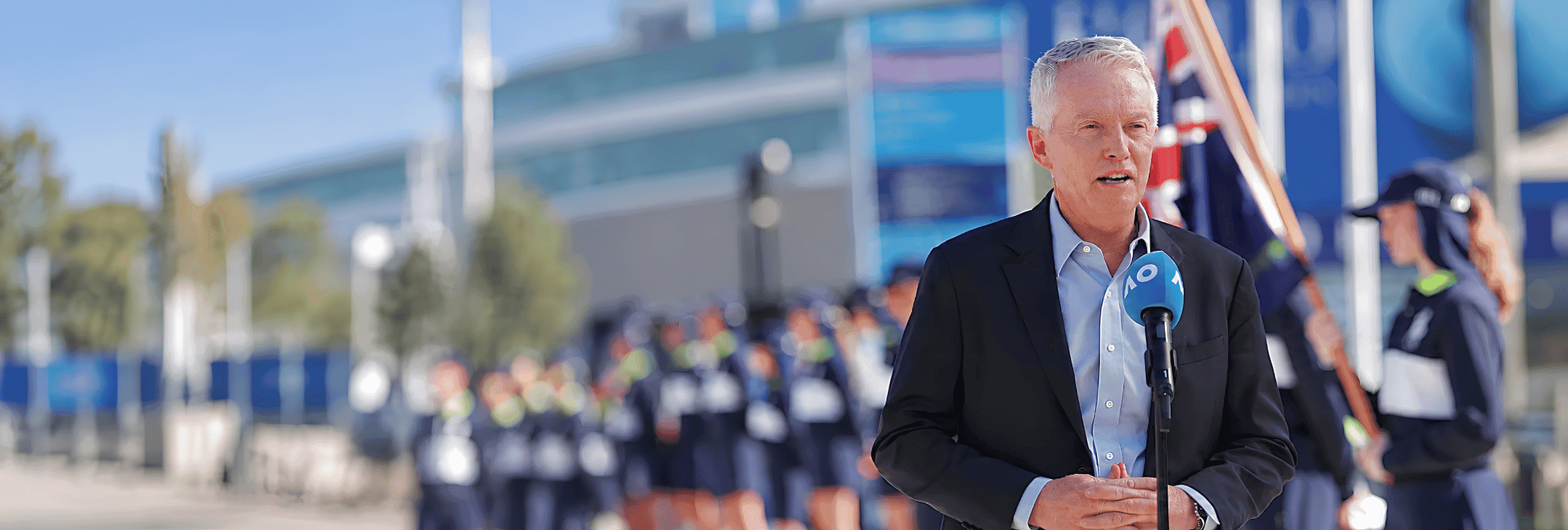
The USTA announced Craig Tiley’s appointment in February, but he began leading the organization on July 20, after more than a decade as Tennis Australia’s chief executive. FOS reports that the organization had planned to consider prediction market partners for 2027 and beyond, until Tiley helped pull the agreement into this year’s tournament. Six weeks into the job, he opened a new sponsorship category while courts continued to argue over the business behind it.
Exclusivity gives Kalshi more than visibility
The USTA said tennis trading volume on Kalshi grew 25-fold year over year, and Tiley saw another way to keep getting fans involved. “We're relentless about keeping tennis at the cutting edge of global sports innovation and fan connection. Partnering with Kalshi gives us an opportunity to pioneer that next generation of fan engagement while ensuring the integrity of our sport.” Tiley said when he made the partnership announcement.
However, Kalshi also gets protection from competitors. FOS reports that the agreement blocks rival prediction markets from advertising at the venue and on tournament TV coverage, including ESPN. Kalshi bought its own logo on the court, and it also bought a promise that no rival logo would sit beside it. Tiley opened this category within a substantial sponsorship business.
The USTA’s audited 2024 accounts report $130.5 million in sponsorship revenue across the organization and its affiliates, alongside $559.7 million in US Open operating revenue. Selling a protected category gives the USTA another source of income, while Kalshi gets an audience its rivals cannot reach through the same advertising space.
For Kalshi, tournament status can make the brand feel familiar to fans who may have never traded an event contract. For the USTA, blocking rivals means giving up the opportunity to sell them that space during the agreement. The fee remains undisclosed, so the financial return cannot be measured publicly.
Three appeals courts disagree over state authority
For Tiley, the legal question is who will regulate Kalshi’s product. Kalshi sells contracts tied to event outcomes, like ‘who will win a match?’ or ‘who wins the championship?’. Its federal license supports its claim that states cannot treat those products like sportsbook bets. Kalshi argues that the Commodity Exchange Act. puts its sports contracts under the Commodity Futures Trading Commission (CFTC, the federal regulator of these exchanges), blocking state gambling rules (lawyers call this preemption).In April, the Third Circuit sided 2-1 with Kalshi, ruling early in the New Jersey case that federal law likely overrode those rules. It held a temporary block on state enforcement.
But on Aug. 28, the Ninth Circuit reached the opposite conclusion in Nevada. “The crucial context that leads us to resist the broadest possible reading is that Kalshi has a gambling problem,” Judge Ryan Nelson wrote. The court treated its sports contracts as gambling despite their financial label. Three days later, Tiley’s organization announced its partnership despite that setback.
Almost a month later, the Sixth Circuit allowed Ohio and Tennessee to enforce their gambling laws. “Kalshi's reading would give the CFTC jurisdiction over event contracts that bear no relation to the goals Congress had in mind,” Judge Julia Smith Gibbons wrote. Her point was that a match result may eventually affect businesses, but those indirect effects do not make it inherently financial under the court’s reading of the law. Kalshi, however, disagrees and expects further review to overturn the ruling. The appeals concern temporary protection from state enforcement while the cases continue.
The conflict also sits closer to Tiley’s tournament. On July 31, New York Attorney General Letitia James sued Kalshi over an allegedly unlicensed gambling operation. Kalshi disputed the allegation, saying states cannot shut down a federally licensed exchange. The lawsuit does not establish that the USTA acted improperly, but it means the tournament signed a multi-year sponsor while its home state challenged that sponsor’s business.
A month later, Kalshi CEO Tarek Mansour used New York as a selling point in the deal announcement: “Every summer the US Open takes over New York, and as a New York company, we're proud to be part of it.”
If state restrictions limit who can use Kalshi, its reach could shrink and weaken the commercial appeal for the USTA. The public announcement does not explain how the partners would deal with that outcome.
Integrity rules address a different risk
Tiley’s promise to protect tennis has practical steps behind it, although those safeguards cannot settle the court dispute. The agreement restricts markets involving umpire decisions, player injuries, and code violations, while Kalshi’s separate confidential data-sharing agreement with the International Tennis Integrity Agency (ITIA) supports real-time surveillance. These controls help Tiley address opportunities to profit from sensitive information or misconduct that could affect the fairness of a match.
The ITIA received 10 match alerts from the regulated betting industry in the second quarter of 2026, but an alert alone does not prove any indication of match fixing. Monitoring gives investigators something to examine without treating every unusual trading pattern as corruption.
The competition for fans extends well beyond Tiley’s tournament. On Aug. 3, Polymarket became the ATP Tour’s official prediction market provider through Tennis Data Innovations, with exclusive streaming rights in the category for about 20,000 matches per season. Its customers can watch matches alongside markets. The ATP does not run the US Open, so its agreement gives Kalshi’s rival a separate route into tennis while Tiley protects Kalshi’s interest at his tournament.
Players want growth reflected in their pay
As tennis sells new commercial rights, players want a clearer connection between that growth and their compensation. The US Open offered a record $108 million package in 2026, up 20%, including $5.5 million for each singles champion and $140,000 for the first-round singles losers. The package also includes $2 million for a new player support program, while the Grand Slams announced a player council. Yet players continue seeking 22% of Grand Slam revenue by 2030, rather than leaving each tournament to choose its annual payment.
At an Aug. 29 US Open press conference, Tiley rejected a fixed revenue percentage: “We don't use that number as a form of calculating how we compensate, because it can be fairly arbitrary from one event to another.” The increase therefore gives players more money without adopting the formula they want.
“From our side, we still do believe that a revenue share is the best way, and now we'll just have much more open communication.” Jessica Pegula, the American star and WTA Players’ Council representative, told FOS at the US Open.
She welcomed the new Grand Slam players' council, but the disagreement over how to divide growing income continues alongside Tiley’s sponsor expansion.
New Jersey asked the Supreme Court to review the legal split on Sept. 2. Kalshi’s response is due Nov. 9, but the justices have not made up their minds on whether they want to give the case a hearing.