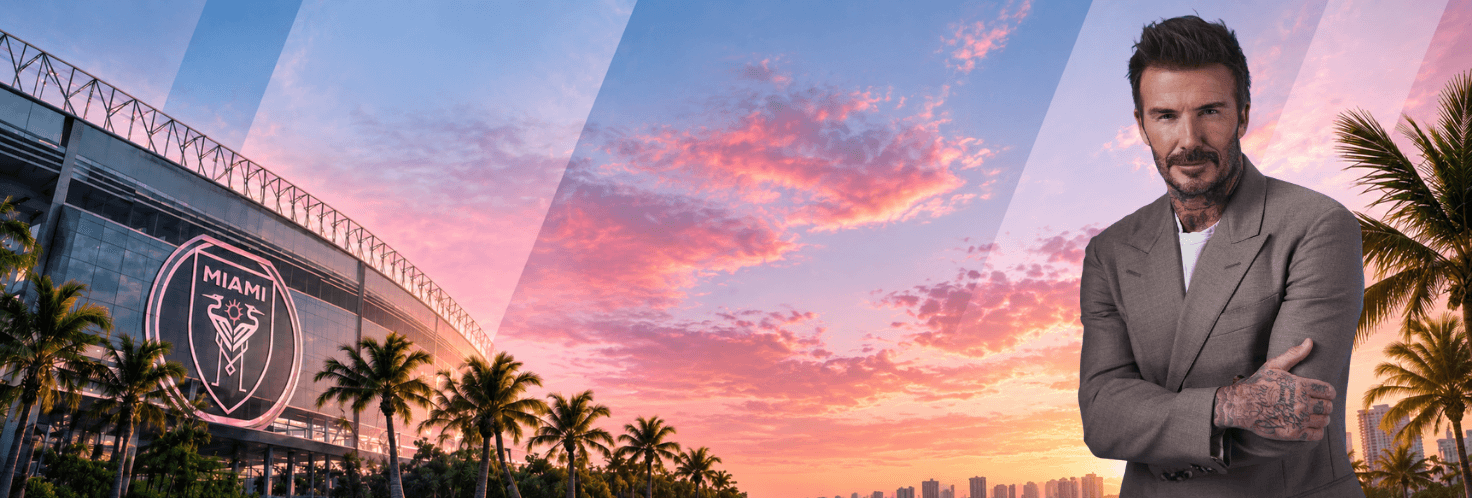

MLS side, Inter Miami has found a way to make a sponsorship announcement interesting to people who tend to skip the bit on official partners.
In its May 7 agreement with IM8, David Beckham’s supplement brand, the club became a shareholder in parent company Prenetics. From the look of things, Miami benefits financially if the business it helps promote becomes more valuable, giving its commercial department something else to follow between matches (the fortunes of a company selling daily nutrition).
Beckham is the connecting chain here. He co-owns Inter Miami and co-founded IM8, while his investment in Prenetics predates the club’s deal. The arrangement invites a tempting conclusion about swapping sponsorship cheques for investment upside. The announcement, however, leaves the cash component and equity terms undisclosed. From what we can establish, Miami has added ownership to a commercial relationship. And its audience can help a sponsor sell products; even so, its shares give it a claim on the value that success might create.
“Inter Miami has never taken equity in a brand partner before; they have now, and that partner is Prenetics,” Danny Yeung, Prenetics’ chief executive and IM8 co-founder, said in the partnership announcement. Yeung presented the stake as evidence of the club’s confidence (confidence is useful when selling supplements, of course, but a shareholder eventually needs the arithmetic to cooperate).
Beckham’s history helps explain why this particular club would be willing to try.
Beckham has been turning attention into ownership for years
When Sir Beckham joined the LA Galaxy in 2007, he secured an option to buy an MLS expansion team for $25 million. His fame helped draw attention to the league, while the option offered a way to participate in its future growth. MLS eventually awarded Miami a franchise in 2018. The expansion fee was only one part of building the club, so comparing it with today’s valuation cannot tell us his investment return. The revealing detail is his decision to negotiate ownership into a playing contract.
He took another ownership position in June 2024, when DB Ventures subscribed for Prenetics shares representing 3% on a fully diluted basis at the time. The percentage describes that transaction; subsequent changes to the share count can alter a holding. But by May 2026, his club was joining him as a shareholder. Across these deals, we can clearly notice a pattern: Beckham’s commercial relationships give him opportunities to own part of the businesses his visibility can help grow.
Meanwhile, Miami has developed considerable visibility of its own, since the arrival of multiple Ballon d’Or winner, Lionel Messi in July 2023. Per Forbes reports, Miami averages an annual revenue in excess of $200 million. And Zoomph estimated that the club made nearly $225 million in organic social-media value last year, the highest figure in its ranking of American teams.
Note: While that estimate measures media exposure, it must never be mistaken for money in Miami’s bank account. In other discussions, it does, however, suggest why a consumer brand would find the club’s audience attractive.
What a supplement company gets from a soccer club
IM8 receives stadium and digital branding, international use of club marks and training facility integration, with products available to all staff and players. Prenetics’ August filing also describes an IM8 Nutrition Center and group name, image and likeness rights involving at least four players, including Messi. For a supplement brand, appearing inside an elite sporting environment can lend an appealing sense of credibility. The association remains a marketing benefit, however; the sponsorship itself provides no scientific proof of product performance.
The commercial logic is pretty simple. If Miami introduces IM8 to customers who keep buying, the relationship could produce value long after their first encounter with a stadium advertisement. A conventional fee lets the club collect an agreed amount for providing access. An equity stake allows it to participate in subsequent business success, provided that success improves the value of its shares. For a club confident in its ability to influence demand, ownership offers a chance to keep earning from the audience it has built.
Prenetics is unusually direct about the incentive, “Owners behave differently from endorsers. They create more, they stay longer, and they cost less cash,” management wrote in its August shareholder letter. The company is betting that financial participation encourages sustained promotional effort while conserving money for growth. Its shareholder partners also include big-name stars like Giannis Antetokounmpo, Aryna Sabalenka and Ollie Bearman.
And there is a growing business behind the pitch. Prenetics reported $45 million in second-quarter IM8 revenue. Its August shareholder letter put preliminary, unaudited July IM8 revenue at $20.9 million, while forecasting $215-222 million for the brand in 2026 and more than $400 million in 2027. The $220-230 million forecast covers Prenetics as a whole. Those forecasts describe management’s expectations, and even meeting them would leave shareholders dependent on profitability and the price investors will pay for the business.
Growth also needs financing. In July, Prenetics announced up to $1 billion from General Catalyst’s Customer Value Fund, covering up to 70% of IM8’s marketing spending on qualifying customer groups. General Catalyst receives a capped return tied to income from the customers it finances. The arrangement provides funding capacity, with no shares issued under the facility. With this, IM8 has resources to pursue customers while Miami supplies exposure (although the financing still has an economic cost when those customer receipts are shared).
The shares come with homework
For Miami, the first calculation is the value of whatever it committed to obtain the equity. Writing in a July Sports Business Journal opinion column, sports business adviser Mauricio Ríos described the structure as exposing the club to “market volatility and no guaranteed return.” His analysis frames the deal as revenue Miami chose to forgo. The public announcement leaves the full payment mix private, so we cannot quantify that trade. A fair comparison would weigh any cash received and the shares’ potential proceeds against the fee another sponsor might have paid, including Miami’s costs of delivering the rights.
Cash has the modest advantage of being useful on payday. A club with dependable operating income may afford to wait for investment gains, but its wage bill will not wait for a favorable market. Prenetics trades on NASDAQ, where its shares can fall even while IM8 sales rise if investors expected faster growth or better profits. The company reported a second-quarter operating loss of about $21 million. Miami owns exposure to the parent company’s financial performance, including the cost of building the brand.
The contract determines how much freedom Miami has to manage that exposure. The announcement does not spell out vesting conditions, lockups, or sale restrictions. If restrictions apply, the club might have to watch a favorable selling opportunity pass. Further share issuance could also reduce its percentage ownership.
Beckham’s overlapping interests are another puzzle because the very terms that conserve Prenetics’ cash need to reward Miami fairly, too. His roles establish a potential conflict requiring careful management. Ríos writes that ownership groups on both sides approved the structure, but that leaves the detailed process unexplained. A convincing account would identify who negotiated for Miami, whether Beckham participated in approval, and whether independent advice supported the valuation.
Managing owner Jorge Mas and his fellow owners have their own club investment to protect.
There is also a connection between financial and reputational risk. If product quality or marketing claims became controversial, Miami could face uncomfortable questions while its investment suffered. The club can help draw attention to IM8, but it cannot make customers buy its products indefinitely. To judge whether the partnership creates lasting value, both sides would need evidence about paying customers and repeat purchases attributable to Miami.
How far the model can travel
The venture capital comparison works because Miami is contributing commercial access in exchange for participation in a company’s future value. Prenetics is publicly listed, and a single sponsor investment gives us no basis to describe Miami as a venture fund. The club is testing whether its brand can function as an asset it invests through negotiated rights. Making that repeatable would require a disciplined way to value deals, limit exposure, and decide when to sell, alongside the familiar work of signing sponsors.
Other clubs could try, although Miami brings an unusual combination of Beckham’s business ties and Messi’s commercial pull. Miami also continues selling valuable conventional rights: Sports Business Journal reports Royal Caribbean’s shirt partnership at eight figures annually and Lowe’s sleeve agreement as the richest in MLS history. Equity can sit alongside those revenues where the club sees a persuasive investment case. Copying the announcement is easier than finding a sponsor whose future returns justify the commitment.
Miami can count the campaigns it runs, the audiences it reaches and the space it gives IM8. Eventually, the investment deserves an equally concrete account of what the club received and what it earned. For now, the disclosed deal supplies neither the number of Miami’s shares nor the valuation used to award them. Sir Beckham has done his part by helping to connect a football club with a growing consumer business. However, the figure needed to judge the bargain is still outside public view (the value of Miami’s side of the deal).