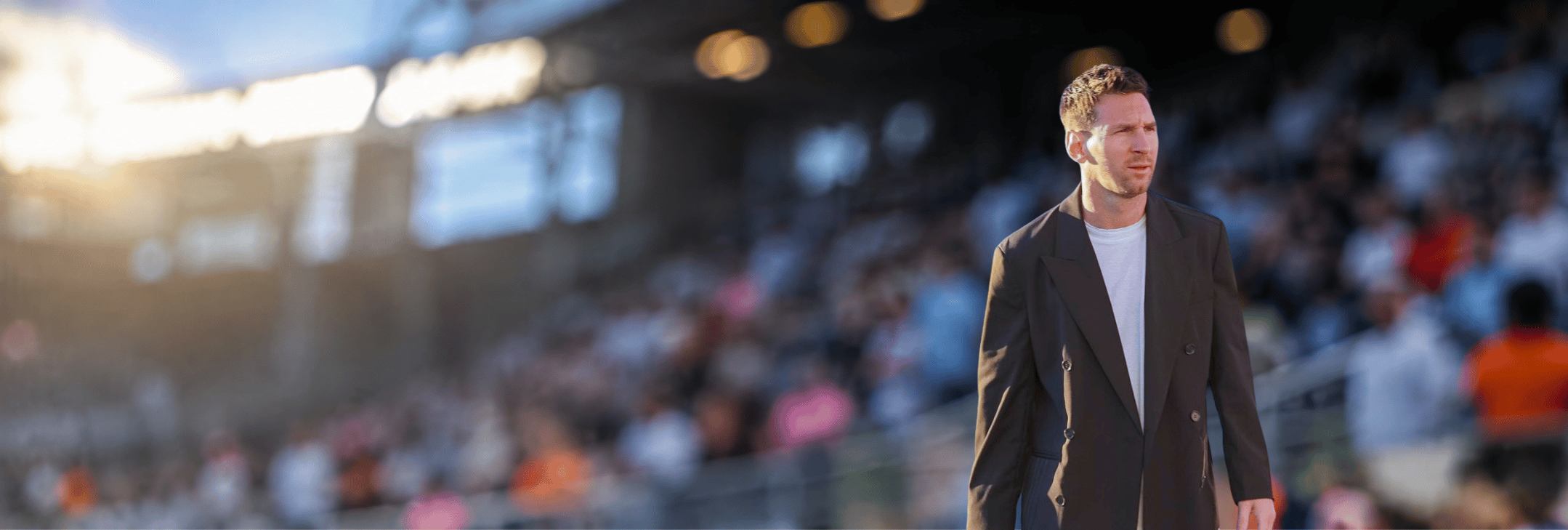
For much of Lionel Messi's career, his father, Jorge, handled the business while his son made headlines on the pitch. From Barcelona and PSG (Paris Saint-Germain) to Inter Miami, Jorge was the man behind the scenes, helping to negotiate the contracts and turning Messi’s football success into a mega business empire.
His death in August has left Messi facing a difficult transition at an important point in his career. The 39-year-old has retired from international football, expanded his investments in Spanish clubs, and is moving closer to a potential ownership stake in Inter Miami.
But the person who helped build much of that business is no longer around to guide its next chapter. In an emotional tribute on Aug. 12, Messi captured just how many roles his father played in his life.
“You were a father, a friend, and an agent,” Messi wrote.
Messi had drafted his retirement message on July 21, before Jorge died, but later acknowledged that the loss strengthened his decision.
Stepping away from the national team gives him more time to focus on Inter Miami, where his contract runs through 2028, and his growing business interests. The challenge now is navigating agreements and relationships his father understood better than anyone.
Jorge Helped Build a Deal Beyond Football
Bringing Lionel Messi to Inter Miami took years of negotiations, and his father was a key figure in those discussions. Inter Miami managing owner Jorge Mas explained just how involved Messi’s dad was in a July 2023 interview with El País.
“It took three years and the last 18 months were very intense. We had many conversations with Jorge [Messi’s father and representative]. By the end of May, I knew we had a deal.” Mas said. “David’s conversations with Lionel were limited to soccer because he was still playing [for Paris St-Germain], and he didn’t want to pressure him. We spoke in Barcelona, Miami, Rosario, Doha... I spent the entire World Cup in Qatar watching Argentina. The Apple TV contract was a very important factor in closing the deal,” he continued.
The negotiations eventually produced an arrangement that went beyond Messi's playing salary, linking his time in Miami to commercial opportunities and a potential ownership stake. Those agreements remain the foundation of Messi's relationship with the club, even as questions remain about who will oversee them following Jorge's death.
Per a 2024 Forbes report, Messi holds an ownership option requiring no buy-in if exercised. Mas then described the intended next step on Fútbol de Primera in April 2025.
“When Lionel finishes playing, he will be a partner, mine and my brother's and David’s, in the club. It was one of the things that attracted Lionel a lot to our project,” Mas said in Spanish.
More recently, The Athletic’s Paul Tenorio reported that the original contract included around 10%, with an undisclosed addition in the 2025 extension. The full terms remain private, and Messi would still need to exercise his ownership option.
For Messi, the immediate business challenge is carrying those arrangements forward without the man who helped to bring them to life. The reported ownership percentage also leaves important details unanswered, including how much influence Messi would have over club decisions and when he could sell his interest.
The Salary Tells Only Part of the Story
If you look only at Messi's payslip, you miss much of the relationship. The MLS Players Association lists a $25 million base salary and $28.33 million in guaranteed compensation for 2026. Its figures exclude performance bonuses and separate contracts with teams or their affiliates.
Meanwhile, Mas put the annual package at $70 million to $80 million in March, including player compensation and equity rights. He did not disclose the calculation. These figures measure different things, so adding them together will count some money twice.
The commercial agreement needs similar care. In 2023, MLS commissioner Don Garber confirmed additional compensation tied to new international MLS Season Pass subscriptions. Forbes also reported an Adidas revenue-sharing arrangement. (The detailed formulas remain private.)
However, Apple folded MLS into its regular subscription in 2026, ending the separate Season Pass. Public reporting does not explain how that change affects Messi’s payments. Whoever oversees this relationship must therefore track changing products and contractual rights, alongside the simpler job of checking his club salary.
Miami Has More Value to Protect
An ownership option becomes more interesting when the underlying business grows. Sportico’s estimate put Miami at $585 million in 2022, before Messi arrived, then $1.19 billion in 2025 and $1.45 billion this year. The latest figure represents a 22% annual rise and puts Miami ahead of LAFC’s $1.4 billion. (An eventual sale could command a different price.)
Messi cannot claim every dollar of that increase. Miami won the 2025 MLS Cup and opened Nu Stadium at Miami Freedom Park on April 4, giving the club sporting success and a permanent home to sell to fans and sponsors.
Still, the dependence on commercial demand is striking. Mas told Bloomberg that sponsorships and other commercial deals account for about 55% of revenue. Keeping those customers after Messi stops playing is essential to making today's growth last. An ownership stake would give him a financial reason to keep supporting the club, although a retired shareholder cannot promise the attraction of seeing Messi play.
The Family Operation Continues Without One Clear Successor
The family has not publicly identified someone taking over Jorge’s entire role. (There may not be another Jorge Messi.) But Lionel has an established business structure around him.
EFE reported in September that his brother Rodrigo heads Limecu España 2010, a Central company connecting the family's interests. His brother Matías leads Argentina's Leones FC, while the family's MiM hotels operate under Meliá. Leo Messi management handles image rights, giving the commercial operation a company through which to manage the use of his name and likeness.
These are working businesses with separate responsibilities, so the succession question concerns how Jorge's duties divide among them. The practical work includes renewing sponsorships, checking payments, and deciding which opportunities deserve his time. Rodrigo’s corporate position alone does not establish that he now negotiates Lionel's playing contract or future Miami stake.
Lionel himself described a learning process at the American Business Forum in Miami in November 2025, while his father was alive.
“Business is something that interests me. I’d like to keep learning because I don't know anything and I'm just starting out in this," Messi said in Spanish.
He described himself as a learner, which makes the people managing each agreement important as he takes on more responsibility for the business carrying his name.
His purchases give that interest substance. After telling Luzu TV in January that ownership appealed more than coaching, he bought UE Cornellà in April. Eldense followed after Jorge’s death. The direction predates the loss, but the expanding workload now comes without its longtime negotiator.
Inter Miami's ownership page still names Jorge Mas, Jose Mas and David Beckham, while Messi remains a player through 2028. The path that could put his name beside theirs took shape while Jorge Messi was alive. Public information has yet to identify who will handle its next steps on Lionel's behalf.