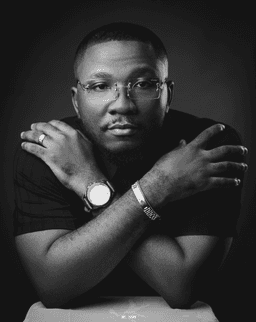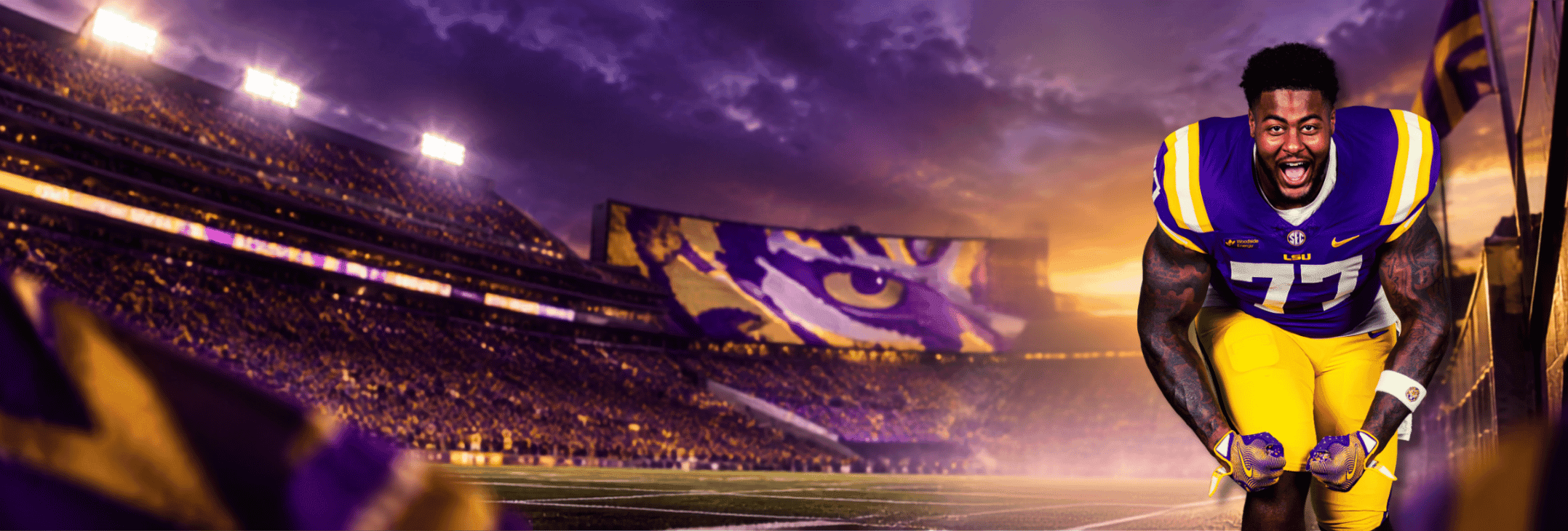

Mike McGlinchey is in his ninth NFL season; he has $52 million guaranteed on his Denver Broncos contract and has no sponsorship deal. Jordan Seaton, on the other hand, is only two games into his first season at LSU and reportedly pockets around $4 million in NIL money.
Both men play offensive tackle. One has years of NFL tape and a professional contract worth tens of millions. The other reached his latest payday before taking a snap for LSU, which gives college football one of the strangest business comparisons in sports.
The gap starts with what each market is trying to price. NFL sponsors usually pay for recognition, reach, and the ability to sell a product to a national audience. College NIL includes the same commercial work, but it operates inside a recruiting market where a player’s earning power can rise with scarcity, transfer competition, and how urgently a program needs him. Seaton’s reported price begins to make sense once those forces enter the calculation.
What Seaton’s $4 Million Represents
Seaton entered the transfer portal on Jan. 12 after two seasons at Colorado, where he made 22 starts at left tackle. LSU lists him as a 2024 Freshman All-American and a 2025 second-team All-Big 12 selection, and he entered the portal as the No. 1 offensive tackle available. Programs were bidding on a proven player at one of football’s hardest positions to fill.
What followed looked a lot like free agency. Per CBS Sports, industry sources believed Seaton could command at least $2.5 million. Mississippi State leaned on his relationship with offensive line coach Phil Loadholt, Miami sold its development record, Oregon coach Dan Lanning flew to Atlanta to meet him, and LSU had an offensive line to rebuild. By Jan. 23, sources believed Seaton had secured more than $4 million; a package which, according to CBS, was the biggest ever for a college offensive lineman.
CBS also reported that Seaton’s camp sought incentives such as cars and real estate, although none of the contracts are public. The Associated Press later reported that his NIL portfolio includes a national pharmacy chain, a fast-food company, a personal finance firm and other brands. He has nearly 100k Instagram followers. While that is a meaningful audience, it looks very different from the reach usually associated with multimillion-dollar celebrity endorsements. The gap between those figures is where NIL’s pricing logic gets interesting.
NFL Linemen Play in a Different Endorsement Market
Let’s look at Dan Moore Jr. as a useful comparison from the NFL. The Tennessee Titans left tackle told the Associated Press that his professional endorsements amounted to a few meet-and-greet appearances during his Pittsburgh years and a grill company that sent him barbecue tools. He never even smelt the Million-dollar sponsorships. Moore also sees the college market moving in a different direction.
Moore’s experience is hardly unusual for his position. McGlinchey has $52 million guaranteed from football but no sponsorship deal, and Sportico’s list of the 20 biggest NFL endorsement earners does not include an offensive lineman. The same list puts Geno Smith at about $1.5 million, Sam Darnold at $1 million, and Deshaun Watson at $750,000. Each figure sits below Seaton’s reported NIL number, even though those quarterbacks are far more familiar to the average NFL viewer.
We have to separate salary from endorsement money here because combining them would distort the comparison. Elite NFL tackles can earn far more from football than Seaton makes at LSU. Professional teams pay linemen for blocking, while corporate sponsors tend to direct their biggest checks toward quarterbacks, receivers, and other recognizable personalities. The league that pays elite tackles tens of millions for football rarely turns the same players into major advertising properties.
Why College Football Prices Seaton Differently
A brand searching for a spokesperson can choose from hundreds of NFL players. LSU had far fewer choices when it went looking for a proven left tackle in January. The Tigers allowed 29 sacks in 2025 and averaged 3.6 yards per rushing attempt while preparing to rebuild most of the offensive line under first-year coach Lane Kiffin. CBS Sports described Seaton as the last impact tackle available in the portal when LSU made its push. Scarcity turns a football problem into a pricing problem quickly.
Put yourself in LSU’s position for a moment. The program was assembling one of the most expensive rosters in the country around quarterback Sam Leavitt and other high-profile transfers. CBS Sports polled more than 50 athletic directors, general managers, agents, cap staffers, and boosters and found several programs above $40 million in estimated roster spending. From that poll, multiple sources identified LSU as the most expensive roster in the sport, with some projections above $50 million. Seaton was one of the highest-paid non-quarterbacks in that build.
The financial structure underneath those estimates changed in 2025. The court-approved House settlement allowed participating Division I schools to provide up to $20.5 million in direct athlete benefits in its first year while keeping third-party NIL in place under new review rules. College football now has school revenue sharing and outside NIL operating side by side, which gives elite transfers more options for compensation.
LSU also entered the chase with an NIL structure built to support athletes. Bayou Traditions, the official collective of LSU Athletics, says it raises money to create NIL opportunities and notes that NIL influences where athletes attend college. The collective shows how fan and donor energy can become commercial opportunity. There is no public evidence that Bayou Traditions funded Seaton’s reported package, so it belongs here as infrastructure rather than a claimed source of his money.
Seaton has genuine commercial appeal too. LSU announced in July that he became the first offensive lineman to sign with Nike at any level through the company’s Blue Ribbon Elite program. He has also promoted Raising Cane’s, the Baton Rouge-rooted restaurant chain, to his social following. If we looked only at follower count, the comparison would remain incomplete. AP noted that former LSU gymnast Livvy Dunne built an audience measured in millions while Seaton’s reported compensation landed in a similar neighborhood.
Marketing experts disagree on how much of that gap is unusual. Chapman University associate professor Niklas Myhr told AP that the industry is still trying to construct a mature market for young college athletes. Opendorse CEO Steve Denton offered the other side, arguing that college athletes can outperform conventional influencers because sports give them intense influence inside their communities. Seaton adds another variable because several programs wanted the same scarce player at the same time. Consumer interest and roster demand are shaping his price in the same environment.
The difficulty of separating those forces helps explain why the College Sports Commission reviews part of the NIL market. On Sept. 9, the commission said it had cleared more than $227 million in deals during July and August, with $188.6 million involving associated entities, a category for people or companies connected to schools. Those deals receive extra scrutiny for valid business purpose and compensation range. The figures show how much school-connected commerce now runs through NIL without turning every associated-entity deal into a booster payment.
Seaton’s Price Could Shift Again
Seaton’s LSU debut offered an early look at the football value behind the price. Against Clemson on Sept. 5, the Tigers ran 94 plays, rushed for 309 yards, and produced 644 total yards in a 51-10 win. The SEC named Seaton its Offensive Lineman of the Week. He still focused on the details afterward, saying, “as far as technique-wise, make sure we got the little details. We gotta be faster as an offense also.” LSU followed with a 45-14 win over Louisiana Tech a week later to move to 2-0.
The pricing difference can follow players into the NFL. Philadelphia Eagles general manager Howie Roseman said before the 2026 draft,
“The biggest issue is that, for the first time in the history of the National Football League, you’re taking players who are taking pay cuts.” He was speaking about prospects generally, but the concern has a real example.
Quinn Ewers reportedly turned down college NIL offers worth up to $8 million before the 2025 draft, then signed a four-year rookie contract worth about $4.3 million after Miami selected him in the seventh round.
Washington could change the calculation again. The revised Protect College Sports Act is headed toward Senate consideration, with debate on proceeding scheduled to begin no earlier than Sept. 15 and no later than Sept. 23. The proposal includes a $22.5 million athlete-retention fund, with up to another $5 million unlocked through qualifying NIL spending on women’s and Olympic sports. The bill would impact how schools and associated entities account for athlete compensation, so today’s pricing structure may not survive in its current form.
LSU visits Ole Miss on Sept. 19, four days after the Senate’s earliest window to move the bill forward. Seaton will keep lining up at left tackle while lawmakers, schools, collectives and brands keep deciding what a player like him should be worth and which part of the bill belongs to football, marketing or both.