
How multi-million dollar buyouts for past coaches are clashing with the millions required to fund modern roster revenue sharing in Gainesville.
College football’s new money problem is easy to see in Gainesville because yesterday’s coaching decisions keep sending bills while the price of tomorrow’s roster keeps rising. Florida fired Billy Napier in October 2025, yet the school sent him another $2.65 million on July 15. Three more payments of the same size are scheduled through July 2029. Dan Mullen, who has not coached a Florida game since 2021, received $1 million on the same date and has one final $1 million installment due next summer.
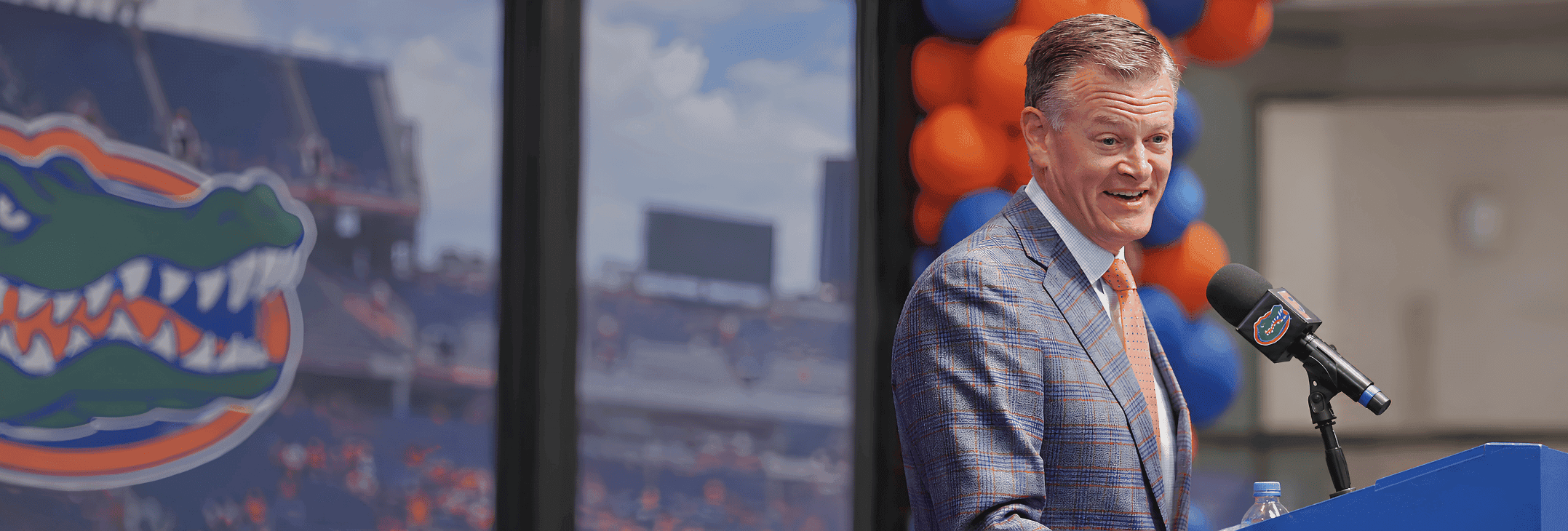
Scott Stricklin, the athletic director who hired both men, is carrying those obligations while funding a version of college football that did not exist when Napier arrived. Florida’s 2026-27 athletics budget is projected at $235.7 million, up $30.4 million from the previous year, and $46.2 million is budgeted for scholarships and revenue sharing. If you follow the ledger instead of the sideline, the overlap is hard to miss. Old coaching contracts are still taking cash out while direct player compensation has become a recurring cost.
Florida Is Still Paying Billy Napier
Napier signed a seven-year, $51.8 million contract in 2021, four years before major athletic departments could share revenue directly with athletes. He finished 22-23 at Florida before Stricklin fired him on Oct. 19, 2025. His agreement left Florida with roughly $21.2 million in termination payments. CBS Sports reported that $10.6 million was due within 30 days, followed by four annual installments of $2.65 million through July 15, 2029.
The contract keeps following Florida because Napier’s agreement has no offset provision (income from another coaching job does not reduce what Florida owes him). He is now the head coach at James Madison. Penn State offers a useful comparison. James Franklin was originally owed about $49 million after his 2025 firing, but his contract included offset language. As his move to Virginia Tech developed, Penn State and Franklin negotiated the obligation down to $9 million, freeing money for the next staff and player revenue sharing.
Florida has another old contract on the calendar. Mullen’s $12 million buyout has been paid in installments since his 2021 firing, with the final $1 million due July 15, 2027. The day after Napier was dismissed, reporters asked Stricklin whether another buyout would limit Florida’s coaching search. “We’re blessed that we have tremendous resources, but it’s not unlimited,” he said. Stricklin now has to manage those old obligations beside costs that did not exist when either contract was signed.
Florida Now Pays Players Directly Too
Those buyouts would be easier to isolate if the cost of running the current program had stood still. The House settlement changed the institutional side of college sports in 2025 by allowing participating schools to provide direct financial benefits to athletes under an annual cap. The first-year figure was about $20.5 million. For 2026-27, the ceiling is about $21.3 million, and the settlement also replaced sport-specific scholarship limits with roster limits.
Florida leaned into both changes. Stricklin said the athletic department planned to increase scholarships from roughly 265 to 320. The UAA’s 2024-25 audited statements warned that the first year of revenue sharing would add $20.5 million in expenses and continue to create fiscal pressure. For 2026-27, Florida has budgeted about $46.2 million for scholarships and revenue sharing combined (the figure covers the athletic department and is not a $46.2 million football payroll).
Player spending joined rather than replaced Florida’s existing football costs. The department now carries direct athlete compensation and more scholarship support while former coaches remain on scheduled payments and the current staff still has to compete at SEC market rates.
The Coaching Bill Did Not Get Cheaper
Florida hired Jon Sumrall on a six-year, $44.7 million deal that averages $7.45 million annually and includes a $16.3 million yearly budget for assistants and support staff. The Gators also brought in former NFL general manager Dave Caldwell to lead the football front office as general manager and associate athletic director.
Sumrall’s 15 assistants are scheduled to make a combined $11.2 million in 2026 (Napier’s 12-man staff made $7.5 million in 2025). Offensive coordinator Buster Faulkner will earn $2.1 million this year, making him Florida’s first $2 million coordinator, while defensive coordinator Brad White starts at $1.85 million. The Associated Press calculated that Sumrall, his assistants and the football front office will cost more than $20 million in 2026. Revenue sharing added a permanent new expense while the price of Florida’s coaching operation continued rising.
Step outside football for a moment and the accounting feels familiar. Florida is financing today’s operation while it continues settling yesterday’s contracts. Stricklin cannot simply move the Napier money into revenue sharing, and current coaching prices still have to be met if Florida wants to avoid another costly reset.
Florida Has to Create More Room in the Budget
We can see where Stricklin expects to find that room once the current budget comes into view. Florida projects roughly $140.5 million in football revenue for 2026-27, about 60% of UAA revenue. SEC and NCAA distributions are projected at $74.1 million, while donor contributions are budgeted at $46.3 million. Those gains help Florida balance the same $235.7 million budget whose expenses rose by $30.4 million in one year.
Cost control is part of the answer too. Before Napier was fired, Florida cut 5% across departments and sports while preparing for the first revenue-sharing season. Stricklin later said, “We tightened our belts in some areas across the department.” He also made clear that Florida would keep looking for commercial income. “We’ll turn over every stone to find new revenue,” he said while discussing sponsorships and other professional-sports-style revenue ideas.
Florida’s audited 2024-25 accounts give the expansion some perspective. The UAA reported $204.2 million in operating revenue against $195.4 million in operating expenses, with a net position of $235.7 million (assets minus liabilities, not cash sitting around for buyouts). Long-term debt stood at $134.9 million, much of it tied to athletics facilities. The figures describe a department with financial strength, while current spending shows why preserving flexibility has become part of Stricklin’s job.
Florida is not the only public program in the state confronting the new math. The Florida Board of Governors temporarily allows universities to use up to $22.5 million a year in unreserved non-athletic auxiliary cash for athletics through fiscal 2028, subject to conditions and reporting. Florida State officials told the board in March that FSU used the $22.5 million bridge to help fund revenue sharing without raising student fees or ticket prices. The rule does not mean Florida has used the same amount. It shows how far the funding question has moved beyond the athletics office.
Napier has described the operational side of the shift from the coach’s chair. In July, while discussing lessons he carried to James Madison, he told On3, “I think that we really struggled to manage the workload that came with NIL, that came with the portal.” Florida’s workload has moved to Sumrall and Caldwell, but Napier’s contract remains on the calendar.
Next July, Florida is scheduled to send Napier another $2.65 million and Mullen his final $1 million, while Sumrall enters year two of his contract and another revenue-sharing cycle is underway. By then, another budget will put a fresh number on how much room Stricklin has left.